Buy schwule-boys.eu ?
We are moving the project
schwule-boys.eu .
Are you interested in purchasing the domain
schwule-boys.eu ?
domain@kv-gmbh.de · 0541-91531010
Buy schwule-boys.eu ?
What is a temporal clause?
A temporal clause is a type of subordinate clause that provides information about when an action takes place in relation to the main clause. It usually includes a time-related word or phrase, such as "when," "while," "after," "before," or "since." Temporal clauses help to clarify the timing of events in a sentence and are commonly used in complex sentences to show the sequence of actions. **
What is the temporal context?
The temporal context refers to the time period or timeframe in which an event, situation, or piece of information occurs or is relevant. It helps to provide a framework for understanding the sequence of events and the historical or current significance of a particular topic. Understanding the temporal context is important for interpreting and analyzing information accurately within its historical or current timeframe. **


Similar search terms for Temporal
Top-Angebote
Products related to Temporal:
-
Adams Media Why Men Love Bitches: From Doormat to Dreamgirl by Sherry Argov - Paperback Relationship & Dating Self-Help Guide for WomenWhy Men Love Bitches by Sherry Argov is a bold and witty dating guide that has sold millions of copies worldwide. This paperback edition delivers Argov's signature no-nonsense advice on confidence, boundaries, and self-respect in relationships. Written for women who feel they give too much and receive too little in return, the book explains why assertive, self-possessed women attract lasting respect and genuine attraction, rather than being taken for granted. Sherry Argov's book presents a sharp and humorous case that self-respect, not self-sacrifice, is what makes a woman irresistible. Drawing on countless real-life dating scenarios, comparison tables, and her own Attraction Principles, Argov unpacks why men consistently gravitate toward women who hold their own rather than those who bend over backwards.6,99 £*Shipping: 2,99 £Secure redirect to the provider
-
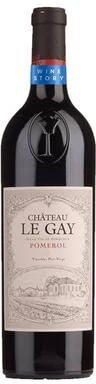
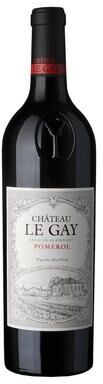
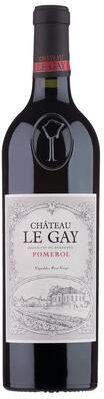
"""Chateau Le Gay""" """Chateau Le Gay (Futures Pre-Sale) 2025 Red Wine - France""""""Blend: 85% Merlot, 15% Cabernet Franc Cassis, exotic red and blue fruits, spring flowers, graphite, and some chocolaty nuances all emerge from the 2025 Château Le Gay, a beautiful Pomerol based on 85% Merlot and 15% Cabernet Franc that will spend..."102,97 $*Shipping: 0,00 $Secure redirect to the provider

-
What does the term "temporal error" mean?
Temporal error refers to a mistake or discrepancy that occurs in relation to time. It can occur when there is a mismatch between the timing of events or actions, leading to inaccuracies or inconsistencies in the temporal sequence. In computing, temporal errors can occur when there are issues with the timing or synchronization of processes, resulting in incorrect outcomes or behaviors. Identifying and addressing temporal errors is important to ensure the accuracy and reliability of systems and processes. **
-
How are temporal clauses formed in Latin?
Temporal clauses in Latin are formed using subordinating conjunctions such as "cum" (when), "postquam" (after), "dum" (while), and "antequam" (before). These conjunctions are followed by a verb in the subjunctive mood to indicate that the action of the temporal clause is dependent on the action of the main clause. For example, "cum veniat" means "when he/she comes" and "postquam viderit" means "after he/she sees." These temporal clauses are used to express the time relationship between two actions or events. **
-
How do you form temporal clauses in French?
Temporal clauses in French are formed using subordinating conjunctions such as "quand" (when), "pendant que" (while), "dès que" (as soon as), "avant que" (before), "après que" (after), etc. These subordinating conjunctions are followed by a subject and a verb in the subjunctive mood if the action in the temporal clause has not yet occurred, or in the indicative mood if the action has already taken place. Temporal clauses are used to indicate the timing or sequence of events in relation to the main clause. **
-
Is there actually a temporal version of homesickness?
Yes, there is a temporal version of homesickness known as "time-sickness." Time-sickness is the feeling of longing for a specific time period in the past, such as childhood or a significant moment in one's life. It can be triggered by nostalgia or a desire to relive happy memories from the past. Time-sickness can lead to feelings of sadness, yearning, and a sense of disconnection from the present moment. **
Can there be simultaneous spatial and temporal summation?
Yes, simultaneous spatial and temporal summation can occur. Spatial summation refers to the combination of signals from different locations on a neuron's dendrites, while temporal summation involves the combination of signals arriving at different times. Both types of summation can occur simultaneously, with multiple signals from different locations and at different times converging to trigger an action potential in a neuron. This allows for the integration of spatially and temporally distributed inputs to generate a coordinated response. **
What are the temporal prepositions for "in" and "nach"?
The temporal preposition for "in" is typically used for future time expressions, such as "in einer Woche" (in a week) or "in zwei Monaten" (in two months). On the other hand, the temporal preposition for "nach" is used for time expressions that refer to events happening after a certain point in time, such as "nach dem Abendessen" (after dinner) or "nach der Schule" (after school). **
Top-Angebote
Products related to Temporal:
-
Uplifted Finds Retro Macintosh Aesthetic Clock & Technical Temporal Desktop Logic Retro Macintosh Aesthetic Clock & Technical Temporal Desktop LogicInaugurate a powerful ChronosSanctuary energy for your digital environment with the ultimate 2026 boutiqueintegrated temporal solution. The Retro Macintosh Aesthetic Clock is the premier choice for creating a TechnicalModern or StudioLuxe atmosphere...212,97 $*Shipping: 0,00 $Secure redirect to the provider
-
Pride Liner - Gay Male - Glisten CosmeticsDescription. Celebrate Pride with purpose. Our Pride Split Liner Palettes are designed to honour and uplift the LGBTQIA+ community. Whether you're creating bold graphic eyeliner looks or painting your favourite flag on your face for a Pride event, these water-activated liners are made to stand out. Each palette is inspired by a different identity within the community, with colours taken directly from their respective Pride flags.. We’re proud to be donating 50% of all profits from this collection to Not a Phase, supporting their mission to uplift the lives of trans+ adults.. Gay Male Pride Palette. This palette honours gay men with a cool-toned mix of green, turquoise and blue shades. While the rainbow flag, designed by Gilbert Baker in 1978, is a symbol for the entire LGBTQ+ community, newer flag variations have been created to represent gay men more specifically. This palette takes inspiration from these designs shared widely in online queer spaces.. Product Info. For external use only. Keep it at room temperature, avoid placing in direct sunlight. Avoid direct contact with eyes and keep out of reach of children. Discontinue use if signs of irritation or rash appear. If you are allergic, or are under treatment/medication for any skin or hair disorders, you must consult with your healthcare professional before using any of our products. To check for skin sensitivity do a small patch test on inner elbow. Glisten Cosmetics will not be held responsible for any reactions that occur due to the customer not taking due care.. All sales are subject to UK & EU law.. Please read our disclaimer before purchasing.. INGREDIENTS: Calcium Carbonate, Aqua, Glycerin, Polysorbate-20, Acacia Senegal Gum, Phenoxyethanol. May contain (+/-): Titanium Dioxide (CI 77891), Yellow 10 (CI 47005), Yellow 11 (CI 47000), Blue 1 (CI 42090), D&C; Violet 2 EXT (CI 60730), Red 22 (CI 45380), Red 28 (CI 45410). Net Weight: 15g. Once opened use within 18 months15,00 £*Shipping: 4,00 £Secure redirect to the provider
-
What is a temporal clause?
A temporal clause is a type of subordinate clause that provides information about when an action takes place in relation to the main clause. It usually includes a time-related word or phrase, such as "when," "while," "after," "before," or "since." Temporal clauses help to clarify the timing of events in a sentence and are commonly used in complex sentences to show the sequence of actions. **
-
What is the temporal context?
The temporal context refers to the time period or timeframe in which an event, situation, or piece of information occurs or is relevant. It helps to provide a framework for understanding the sequence of events and the historical or current significance of a particular topic. Understanding the temporal context is important for interpreting and analyzing information accurately within its historical or current timeframe. **
-
What does the term "temporal error" mean?
Temporal error refers to a mistake or discrepancy that occurs in relation to time. It can occur when there is a mismatch between the timing of events or actions, leading to inaccuracies or inconsistencies in the temporal sequence. In computing, temporal errors can occur when there are issues with the timing or synchronization of processes, resulting in incorrect outcomes or behaviors. Identifying and addressing temporal errors is important to ensure the accuracy and reliability of systems and processes. **
-
How are temporal clauses formed in Latin?
Temporal clauses in Latin are formed using subordinating conjunctions such as "cum" (when), "postquam" (after), "dum" (while), and "antequam" (before). These conjunctions are followed by a verb in the subjunctive mood to indicate that the action of the temporal clause is dependent on the action of the main clause. For example, "cum veniat" means "when he/she comes" and "postquam viderit" means "after he/she sees." These temporal clauses are used to express the time relationship between two actions or events. **
Similar search terms for Temporal
-
Adams Media Why Men Love Bitches: From Doormat to Dreamgirl by Sherry Argov - Paperback Relationship & Dating Self-Help Guide for WomenWhy Men Love Bitches by Sherry Argov is a bold and witty dating guide that has sold millions of copies worldwide. This paperback edition delivers Argov's signature no-nonsense advice on confidence, boundaries, and self-respect in relationships. Written for women who feel they give too much and receive too little in return, the book explains why assertive, self-possessed women attract lasting respect and genuine attraction, rather than being taken for granted. Sherry Argov's book presents a sharp and humorous case that self-respect, not self-sacrifice, is what makes a woman irresistible. Drawing on countless real-life dating scenarios, comparison tables, and her own Attraction Principles, Argov unpacks why men consistently gravitate toward women who hold their own rather than those who bend over backwards.6,99 £*Shipping: 2,99 £Secure redirect to the provider
-
"""Chateau Le Gay""" """Chateau Le Gay (Futures Pre-Sale) 2025 Red Wine - France""""""Blend: 85% Merlot, 15% Cabernet Franc Cassis, exotic red and blue fruits, spring flowers, graphite, and some chocolaty nuances all emerge from the 2025 Château Le Gay, a beautiful Pomerol based on 85% Merlot and 15% Cabernet Franc that will spend..."102,97 $*Shipping: 0,00 $Secure redirect to the provider
-
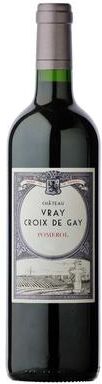
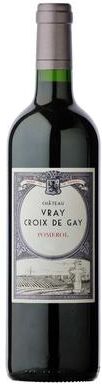
"""Chateau Vray Croix de Gay""" """Chateau Vray Croix de Gay 2018 Red Wine - France""""""Blend: 90% Merlot, 10% Cabernet Franc The Vray Croix de Gay is an attractive, open-knit wine, just as it was en primeur. Pliant, silky and sumptuous, the 2018 is simply impeccable in its balance. Inky dark fruit, lavender and a hint of spice are..."92,99 $*Shipping: 0,00 $Secure redirect to the provider
-
"""Chateau Vray Croix de Gay""" """Chateau Vray Croix de Gay 2020 Red Wine - France""""""Blend: 75% Merlot, 25% Cabernet Franc The 2020 Vray Croix de Gay has developed into a gorgeous, exotic Pomerol. Super-ripe red fruit, blood orange, mint, spice and cedar all come together effortlessly. This racy, layered Pomerol is stylish and..."93,99 $*Shipping: 0,00 $Secure redirect to the provider
-
How do you form temporal clauses in French?
Temporal clauses in French are formed using subordinating conjunctions such as "quand" (when), "pendant que" (while), "dès que" (as soon as), "avant que" (before), "après que" (after), etc. These subordinating conjunctions are followed by a subject and a verb in the subjunctive mood if the action in the temporal clause has not yet occurred, or in the indicative mood if the action has already taken place. Temporal clauses are used to indicate the timing or sequence of events in relation to the main clause. **
-
Is there actually a temporal version of homesickness?
Yes, there is a temporal version of homesickness known as "time-sickness." Time-sickness is the feeling of longing for a specific time period in the past, such as childhood or a significant moment in one's life. It can be triggered by nostalgia or a desire to relive happy memories from the past. Time-sickness can lead to feelings of sadness, yearning, and a sense of disconnection from the present moment. **
-
Can there be simultaneous spatial and temporal summation?
Yes, simultaneous spatial and temporal summation can occur. Spatial summation refers to the combination of signals from different locations on a neuron's dendrites, while temporal summation involves the combination of signals arriving at different times. Both types of summation can occur simultaneously, with multiple signals from different locations and at different times converging to trigger an action potential in a neuron. This allows for the integration of spatially and temporally distributed inputs to generate a coordinated response. **
-
What are the temporal prepositions for "in" and "nach"?
The temporal preposition for "in" is typically used for future time expressions, such as "in einer Woche" (in a week) or "in zwei Monaten" (in two months). On the other hand, the temporal preposition for "nach" is used for time expressions that refer to events happening after a certain point in time, such as "nach dem Abendessen" (after dinner) or "nach der Schule" (after school). **
* All prices are inclusive of VAT and, if applicable, plus shipping costs. The offer information is based on the details provided by the respective shop and is updated through automated processes. Real-time updates do not occur, so deviations can occur in individual cases. ** Note: Parts of this content were created by AI.